
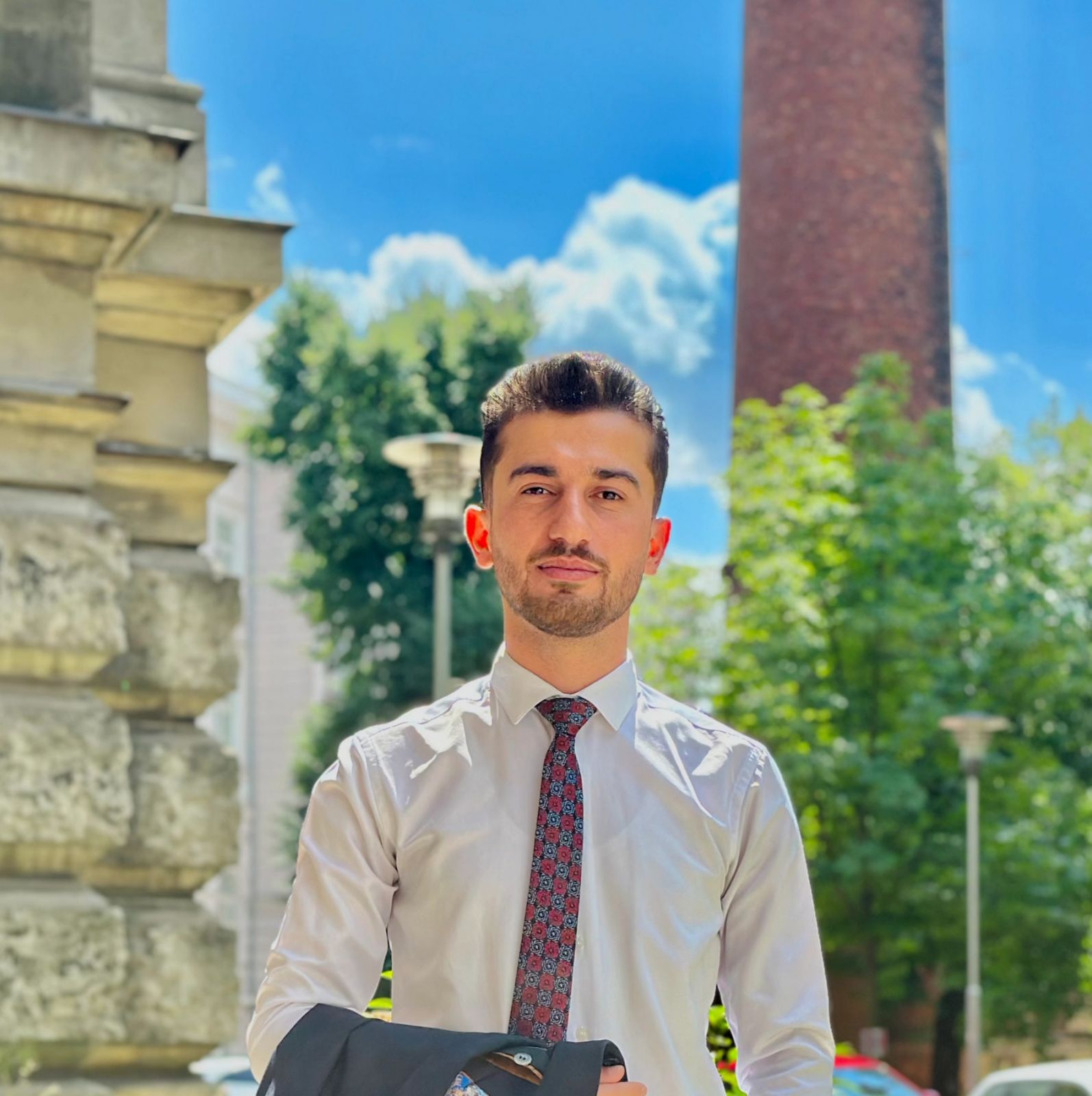
Mr.
Hawrez ISMAEL
Adam Mickiewicz University in PoznanBiography
A multidisciplinary background in biotechnology, biochemistry, and biomaterials engineering has shaped a strong scientific foundation for research in regenerative medicine and advanced manufacturing. Academic training began with a Bachelor’s degree in Clinical Biochemistry at Hawler Medical University, with a thesis exploring correlations between diabetes mellitus and hyperlipidemia. Following professional experience in the pharmaceutical industry, a Master’s degree in Applied Biotechnology was completed at the Warsaw University of Technology, focusing on mechanochemical and solution-based cocrystallization of cinchona alkaloids with selected drug molecules.
The research trajectory has been directed toward the development of biofunctional materials and bioprinting technologies. Work as a Research Assistant at the BioBiomaterials & Biofabrication Laboratory, Center for Advanced Technologies, Adam Mickiewicz University, has involved active participation in interdisciplinary projects such as PulsBioInk and TwoComponentBioink. Emphasis has been placed on the synthesis, chemical modification, and physicochemical characterization of hybrid natural hydrogels particularly methacrylated derivatives of gelatin, pectin, and carboxymethyl cellulose, for use as bioinks in extrusion and volumetric bioprinting.
Scientific contributions have been presented at international meetings, including Biofabrication 2025, European Society for Biomaterials (ESB) 2025, and The Second Alpine Winter School for Biofabrication. Membership in the International Society for Biofabrication (ISBF) and the European Society for Biomaterials (ESB) has enabled active engagement with the global scientific community.
Current research interests are centered on the design of sustainable, biocompatible materials that can mimic the extracellular matrix and support tissue regeneration. A long-term vision is to translate fundamental biomaterials research into clinically relevant applications in cardiovascular and neural tissue engineering.
Expertise
Expertise has been developed in polymer synthesis, biomaterial modification, and advanced 3D bioprinting techniques for regenerative medicine. Specific research focus has been directed toward the functionalization of natural polymers such as gelatin, pectin, alginate, and carboxymethyl cellulose to obtain photo-crosslinkable hybrid bioinks with tunable mechanical, rheological, and degradation properties.
Comprehensive experience has been gained in analytical and physicochemical characterization methods, including NMR, FTIR, UV-Vis spectroscopy, XRD, TGA, and microscopy (optical, fluorescence, and confocal). Proficiency has also been demonstrated in mechanical and rheological testing of hydrogels, bioresin preparation, and volumetric additive manufacturing using the Tomolite™ VAM platform.
Biological evaluations have been conducted on cell-laden hydrogels to assess cytocompatibility and cellular distribution within bioprinted constructs. Additional expertise extends to cocrystallization, drug delivery, and material–cell interaction studies, integrating knowledge from both pharmaceutical and bioengineering disciplines.
This interdisciplinary expertise enables the design and fabrication of biocompatible, structurally stable, and functionally adaptive materials for biomedical applications, with a particular emphasis on cardiac tissue and vascular scaffolds
Publication(s)
Title: 3D bioprinted cell-laden GrooveNeuroTube: a multifunctional platform for ex vivo neural cell migration and growth studies.
Litowczenko, J., Richter, Y., Ismael, H., Popenda, Ł., Ostrowski, A., Fiedorowicz, K., Rodriguez-Cabello, J. C., Wychowaniec, J. K., & Tadyszak, K.
Biofabrication, Accepted Manuscript (Online 9 September 2025).
DOI: 10.1088/1758-5090/ae0550